

Patient Info
Age:
20-29
Ethnicity:
White
Height:
5’ 0” - 5’ 5”
Weight
100 - 149 lbs
Ready to see what's possible for you?
Schedule your personal consultation with Dr. Shamoun today and take the first step toward looking as vibrant as you feel.
Book An Appointment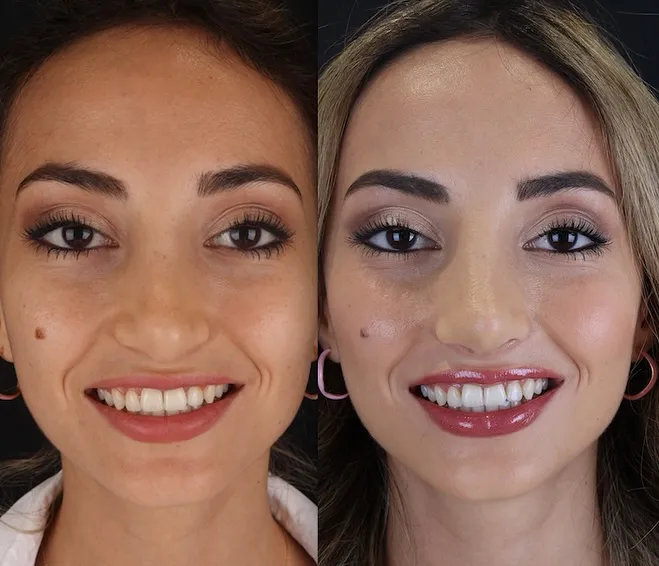
Front View
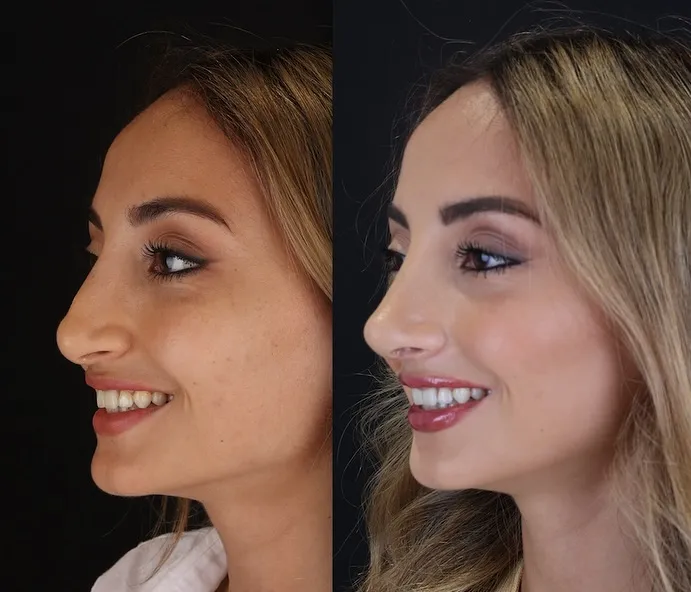
Side View
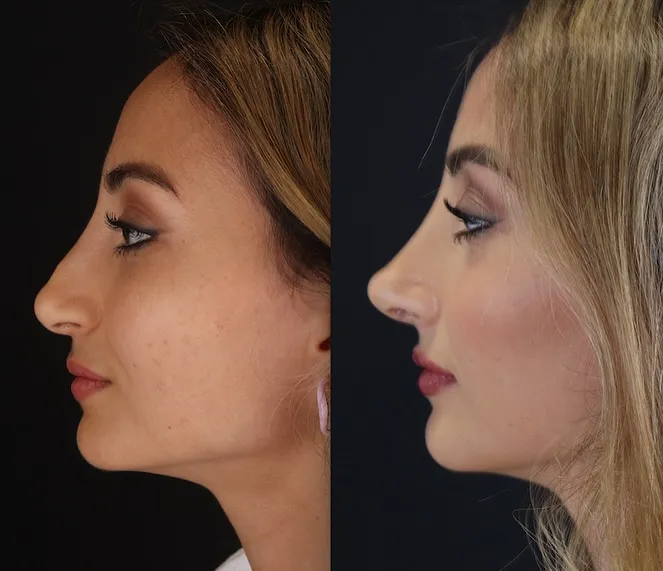
Profile View
Revision Septo-Rhinoplasty
My Approach
This beautiful young Middle Eastern patient presented ten years after a prior rhinoplasty with persistent imbalance of the dorsum and nasal tip. The tip cartilages were distorted, structurally weak, and asymmetrical — common findings in secondary rhinoplasty cases. Reconstruction was performed using meticulous, preservation-focused techniques. No internal packing or nasal bone fracturing was required, allowing for a smoother recovery and faster return to normal activities. Structural support was restored with costal cartilage grafting, and more than 20 permanent sutures were carefully removed. Loop magnification and precise layered dissection were used to respect normal anatomy and protect vascularity. At just 7 days post-operative, immediately after suture removal, swelling is minimal and she returned to work on postoperative day three. The tip is intentionally slightly over-projected and rotated at this stage — a planned maneuver that settles into ideal balance as healing progresses. Revision rhinoplasty requires finesse, patience, and extensive experience. Every step must prioritize structure, stability, and long-term harmony rather than aggressive reduction.

Dr. John Shamoun
MD FACS
The Healing Process
Recovery after secondary rhinoplasty is often smoother than patients expect when meticulous and atraumatic techniques are used. During the first week, mild swelling and congestion are normal. Because no packing or bone fractures were performed, breathing is more comfortable and bruising is minimal. Most patients return to work or social activities within a few days. Early on, the tip may appear slightly elevated or firm — this is intentional and gradually softens as swelling resolves. The majority of visible swelling improves over the first few weeks, while subtle refinement continues for several months. Final definition, particularly in revision cases, may take up to one year as the skin redrapes and scar tissue matures. Patience during healing is essential. The nose continues to improve steadily over time.
FAQs
Revision (secondary) rhinoplasty is surgery performed to correct functional or aesthetic concerns after a prior nose surgery. It often involves rebuilding structure rather than simply reshaping the nose.
Previous surgery alters the normal anatomy and creates scar tissue. Cartilage may be missing or weakened, and tissue planes are harder to separate. This makes the procedure technically more demanding and less predictable, requiring advanced reconstructive techniques.
Most revision patients do. Cartilage grafts — often from the septum, ear, or rib — provide strength, definition, and long-term stability. Rib cartilage is commonly used in complex reconstructions because it offers the most reliable structural support.
Not necessarily. When trauma is minimized and delicate techniques are used, swelling and bruising can be surprisingly mild. Many patients resume light activity or return to work within several days, though full healing still takes months.
This is intentional. Swelling and gravity cause the tip to settle over time. Slight early over-correction ensures the nose heals into the proper long-term position rather than drooping later.
In many modern cases, internal packing is unnecessary. Avoiding packing improves comfort, allows easier breathing, and leads to a more pleasant recovery experience.