

Patient Info
Age:
30-39
Ethnicity:
White
Height:
5’ 0” - 5’ 5”
Weight
100 - 149 lbs
Ready to see what's possible for you?
Schedule your personal consultation with Dr. Shamoun today and take the first step toward looking as vibrant as you feel.
Book An Appointment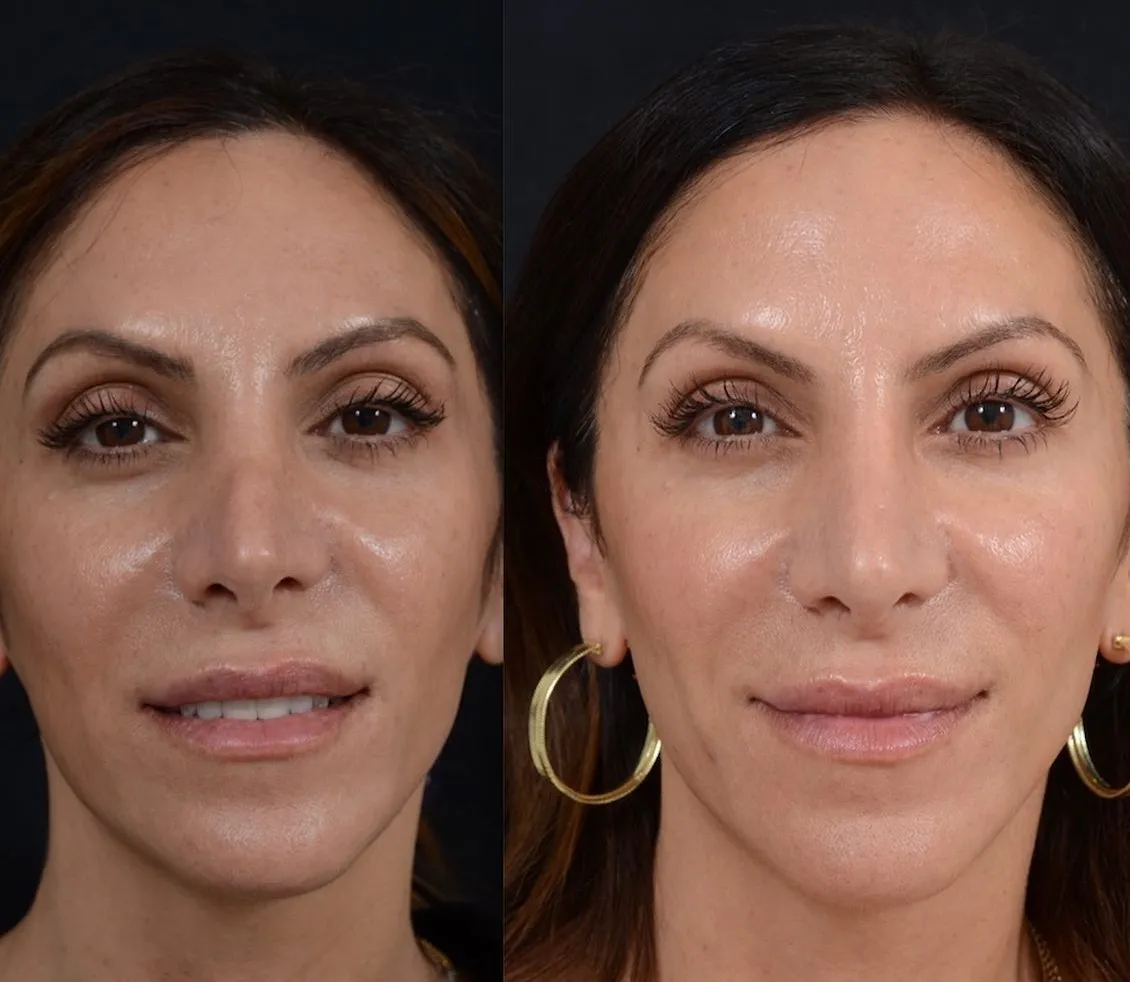
Front View
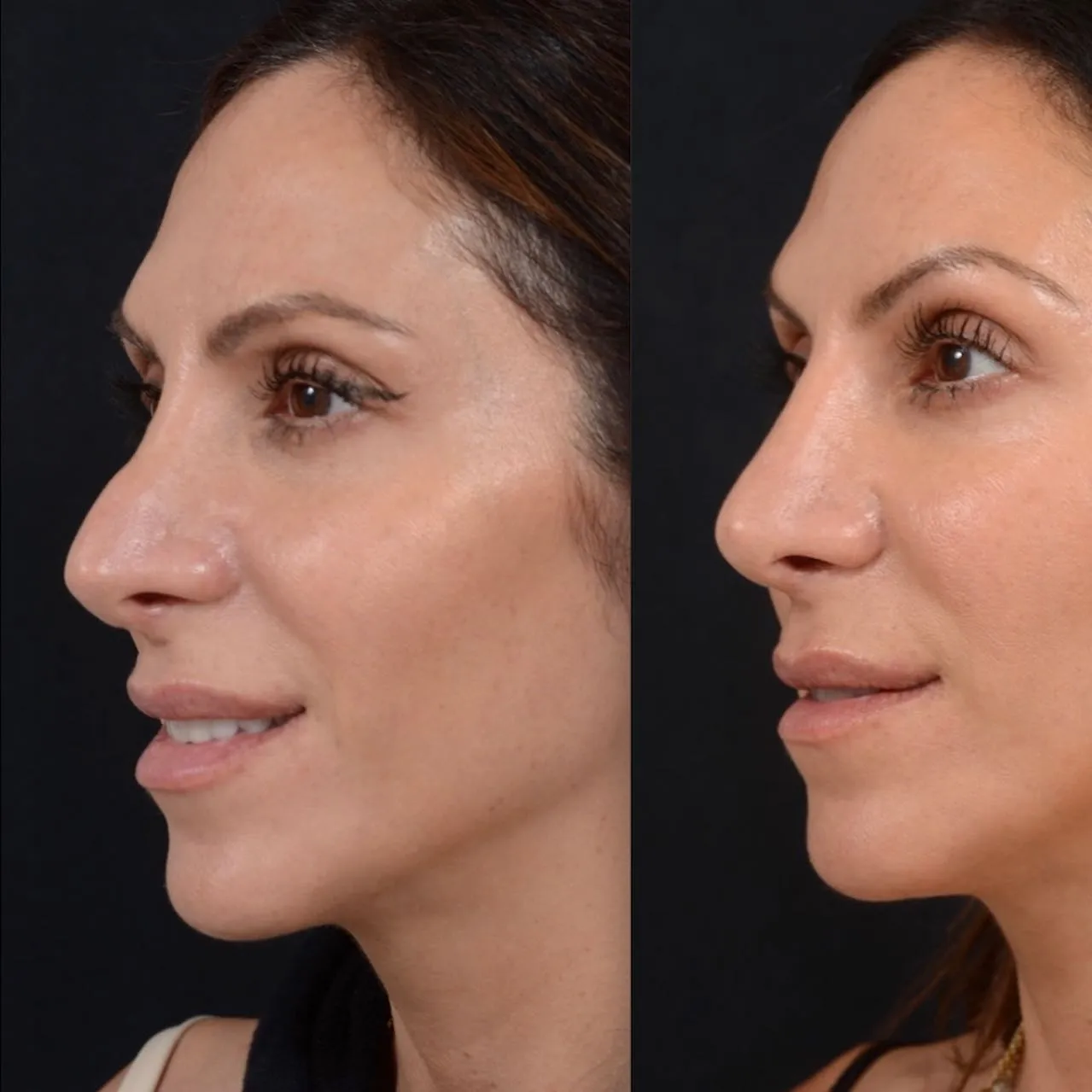
Side View
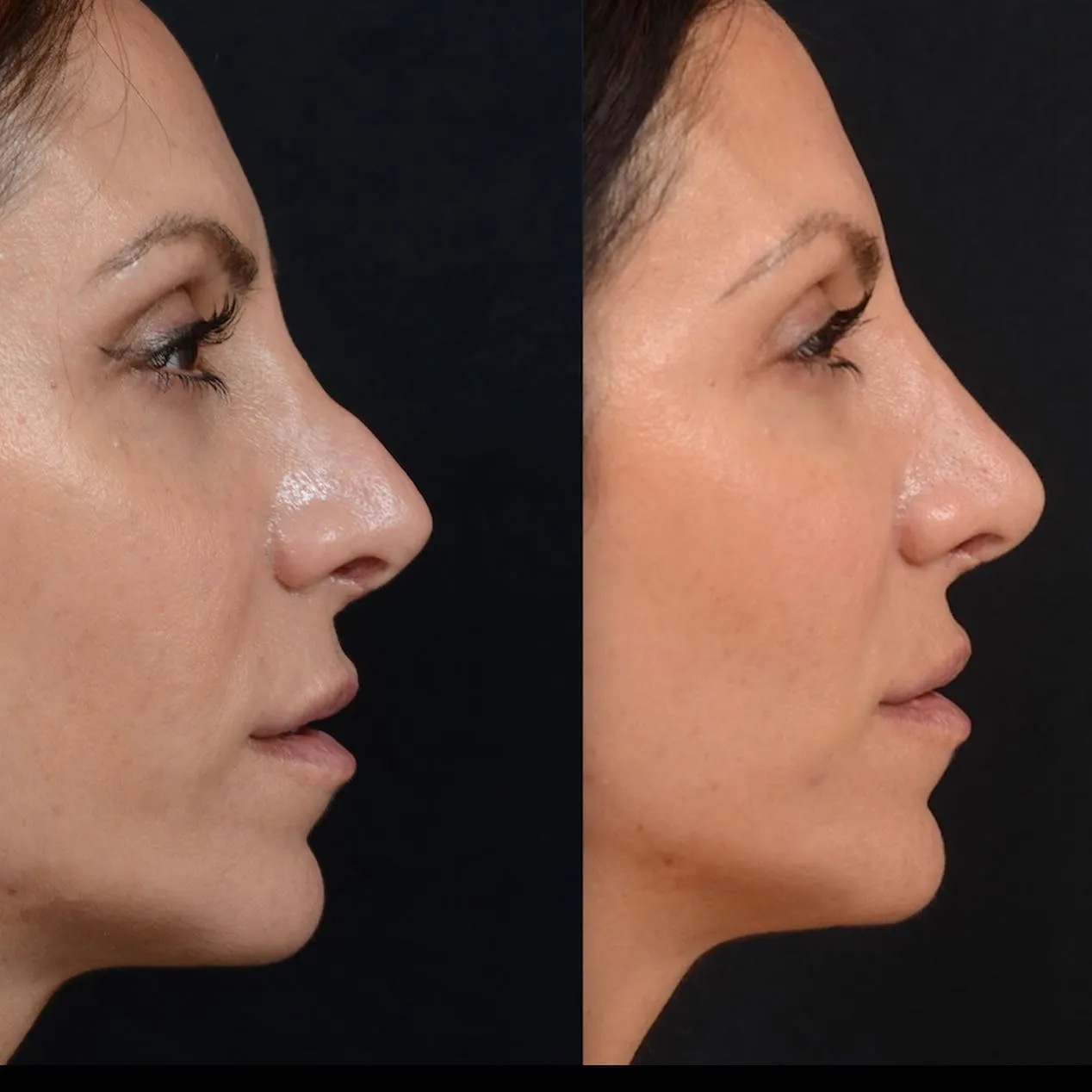
Profile View
Symmetry Rhinoplasty
My Approach
This beautiful young Middle Eastern woman presented with significant nasal deformities following an unfavorable rhinoplasty performed elsewhere more than 25 years ago. Unfortunately, we see many patients like this—individuals who trusted a prior surgery and were left with structural damage that worsened over time. Her concerns were not simply cosmetic. The nose had multiple iatrogenic, or surgery-induced, problems including inverted V deformities, a parrot beak appearance, deviation of the nasal pyramid, excessive dorsal reduction, and extensive internal scarring. Much of the natural support framework had been removed, leaving the nose weak, distorted, and unbalanced. Secondary and reconstructive rhinoplasty is fundamentally different from primary surgery. In these cases, we are not just refining shape—we are rebuilding structure. Using magnification and meticulous technique, we reconstructed the nose with ear cartilage, rib cartilage, and fascia grafts to restore strength, smooth contours, and long-term stability. Cartilage grafts act as a new framework, replacing what had previously been over-resected. The goal is not to make the nose smaller, but to make it stronger, straighter, and harmonious with the rest of the face. Symmetry rhinoplasty demands patience, precision, and experience. Every millimeter matters. Overcorrection or further removal would only worsen the problem. Instead, thoughtful reconstruction allows the nose to look natural and function properly again.

Dr. John Shamoun
MD FACS
The Healing Process
Recovery after revision rhinoplasty is often similar to primary rhinoplasty, though swelling can last slightly longer due to scar tissue and more extensive reconstruction. During the first week, swelling and bruising around the eyes and nose are common. A small splint is typically worn for protection and removed after about one week. Most patients return to light activities or work within 7 to 10 days. By two to three weeks, the majority of visible swelling improves. However, because grafts are used and tissues have been previously operated on, subtle swelling—especially in the nasal tip—can take several months to fully resolve. Over the course of a year or more, the nose continues to refine and settle. Final definition and contour are typically appreciated between 12 and 18 months, which is normal for complex reconstructive cases.
FAQs
Revision rhinoplasty is surgery performed to correct or improve the results of a previous nose surgery. It often involves repairing structural damage, scar tissue, or deformities rather than simply refining appearance.
When too much nasal cartilage was removed in the first surgery, new structural support is needed. Ear and rib cartilage provide strong, reliable material to rebuild the framework and maintain long-term stability.
Cartilage is harvested safely and conservatively. The ear typically maintains its normal shape, and the rib area heals with a small, well-hidden scar. Most patients have no functional issues afterward.
Most patients resume normal daily activities within one to two weeks. However, final refinement takes longer than primary rhinoplasty, often up to a year or more, especially in the nasal tip.
Discomfort is usually mild to moderate and well controlled with medication. Most patients describe pressure or congestion rather than significant pain.
Most can be significantly improved, but the degree of correction depends on available tissue, scarring, and skin quality. Realistic expectations and careful planning are essential.